Instead of building a house, he moved a Boeing 727 into the Oregon woods, and has lived in it for 25 years



Building a house on a wooded lot means years of plans, permits and a construction budget that keeps climbing. For a lot of people with land, the house they’d like to put on it simply never gets built.
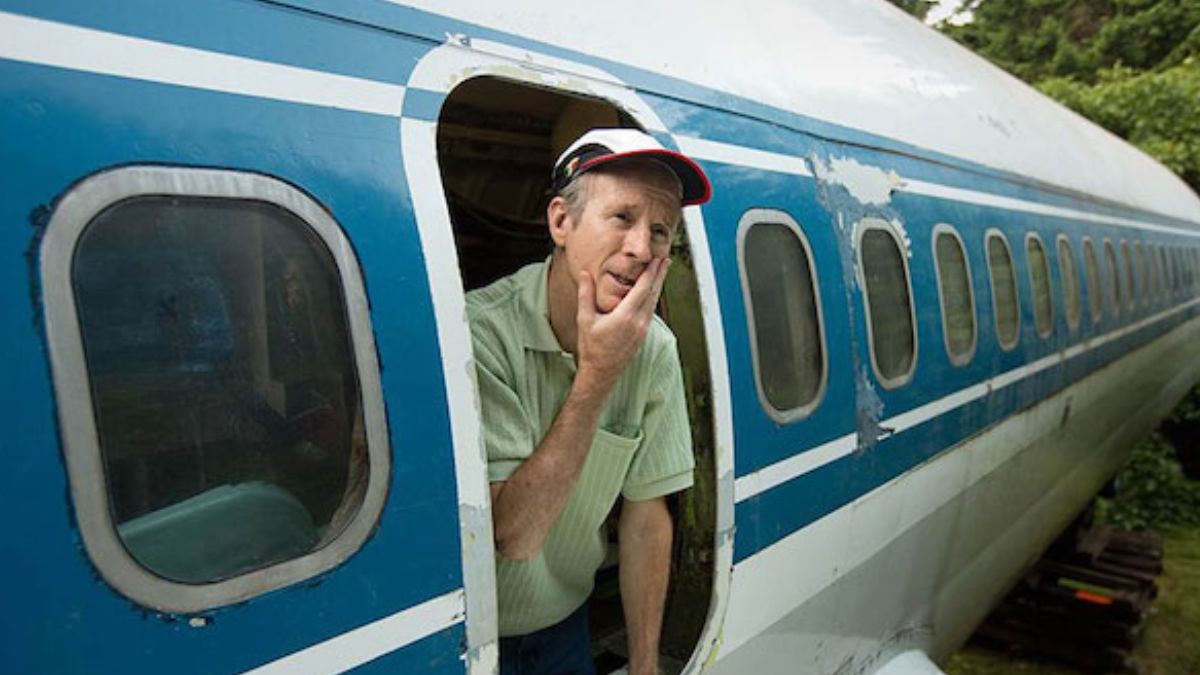
Bruce Campbell went another way. The electrical engineer had owned 10 acres in Hillsboro, a suburb of Portland, Oregon, since the early 1970s, when he bought the land for $25,800. In 1999, instead of framing a house, he bought a retired Boeing 727 from a salvage company for $100,000 and turned the airliner into his home in the woods.
Why an airliner makes a sturdy little house ?
A jetliner is built to hold people safely, and it already has walls, windows, wiring and a roof. Campbell’s 727 gives him about 1,066 square feet inside, all of it already enclosed before he moved in a single piece of furniture.
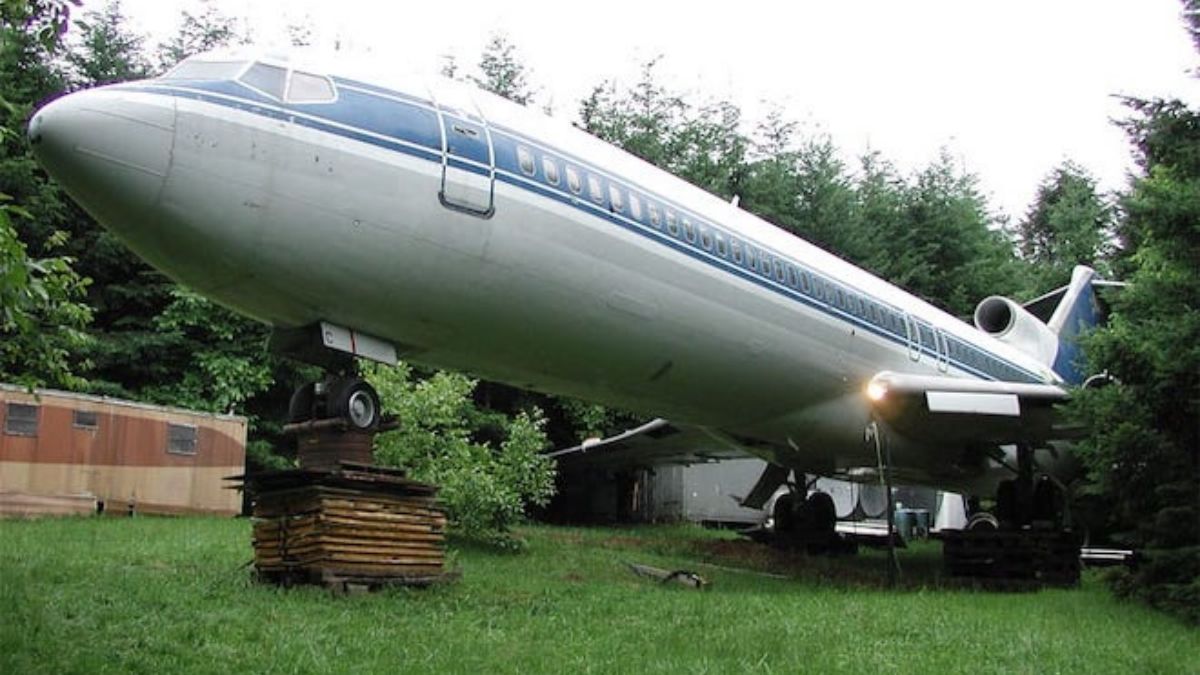
The plane also came with a history. It had been used in 1975 to carry the remains of Aristotle Onassis, and it was sitting in Greece when Campbell bought it. It was flown to Oregon, its engines were removed, and it was towed through downtown Hillsboro to the property. The whole move, including taking off the engines, cost about $120,000. Without engines, the plane will never fly again.
Small footprints make unusual layouts work. A 225-square-foot tiny home on a trailer fits a main-floor bedroom and two sleeping lofts by tucking the laundry under the loft stairs.
What it took to turn a 727 into a home ?
- Buy the plane. About $100,000 from a salvage company in 1999. Campbell later called going through a salvage company a big mistake and advises buying a jetliner that’s intact and fully functional instead.
- Move it. About $120,000 to fly it to Oregon, remove the engines and tow it to the land.
- Convert the cabin. Around $15,000 and two years of work.
- Keep the essentials simple. Inside are a makeshift shower, a temporary sink, a portable washing machine, a refrigerator, a food service cart used as a pantry and a futon sofa that doubles as his bed.
- Skip the stove. He has a microwave and a toaster oven and says he barely cooks.
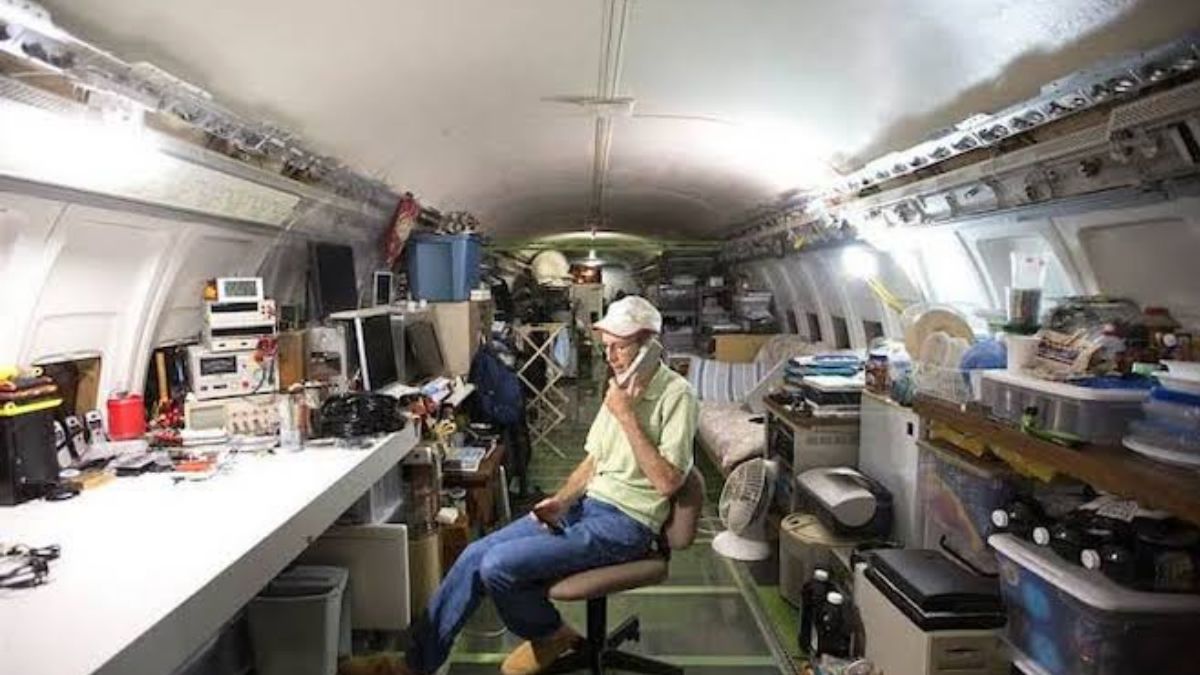
Living there is cheap. In 2022, Campbell put his monthly costs at about $370, including around $220 in property taxes plus electricity. He doesn’t live there all year: he splits his time between the U.S. and Japan, where he hopes to have a plane home someday, and he gives tours of the 727 when he’s in Oregon.
Plan B, if a jetliner isn’t in the cards: the lesson travels. A sturdy existing shell, from a shipping container to a vintage camper, can cost far less to finish than building from the ground up.
What a plane house asks of the land under it ?
Any unconventional home still has to satisfy local rules. In Oregon, a legislative research brief on tiny homes notes that they are subject to building codes and licensing standards, and that zoning codes decide where they can be placed. Check with your county’s planning and building offices before you buy anything big enough to live in.
Campbell’s numbers also leave things out. His $370 a month doesn’t include the land he bought decades ago, and his own experience with the salvage company shows how fast the purchase can go wrong. Plan for transport, utilities, insulation and maintenance on a structure that was never designed to sit still. Start with the land and the rules, then choose the shell. That’s the trick.